
Pallet Basics for LTL Shipping: Sizes, Types, and Services That Keep Freight Moving

Pallets are one of the most overlooked parts of freight shipping, yet they play a critical role in how LTL shipments move through the network. Many businesses simply use whatever pallets are available, without considering how size, condition, and consistency affect shipping performance.
In LTL shipping, where freight is handled multiple times across terminals, pallet quality directly impacts stability, handling efficiency, and the risk of product damage. For small and mid sized businesses, understanding pallet basics can help improve shipping outcomes and reduce avoidable issues.
LTL shipping environments are built around standardization. Using the right pallet size allows freight to be loaded efficiently, handled consistently, and transported with fewer complications.
Why Pallet Choice Matters in LTL Shipping
Unlike full truckload shipments, LTL freight is handled multiple times as it moves through terminal networks. Forklifts move shipments between trailers, staging areas, and loading docks along the route.
If pallets are inconsistent, damaged, or poorly sized, shipments are more likely to shift, require rehandling, or arrive with damage. Strong, properly sized pallets help ensure freight moves smoothly and predictably.
For businesses shipping regularly, pallet consistency is just as important as packaging and labeling.
Standard Pallet Sizes Used in Freight Shipping
The most widely used pallet size in North America is the 48 by 40 inch GMA pallet. This size is compatible with most trailers, warehouse racking systems, and handling equipment, which makes it the most efficient option for general freight.
Other common pallet sizes include 48 by 48, 44 by 44, 42 by 42, and 36 by 36 pallets. These are used depending on the type of product being shipped, weight distribution, and packaging requirements.
Using standard pallet sizes helps maximize trailer space, improve handling efficiency, and reduce the likelihood of delays during transit.
Understanding Pallet Grades and Quality
Pallet condition plays a major role in shipping performance. Pallets are typically categorized by grade, which reflects their condition and structural integrity.
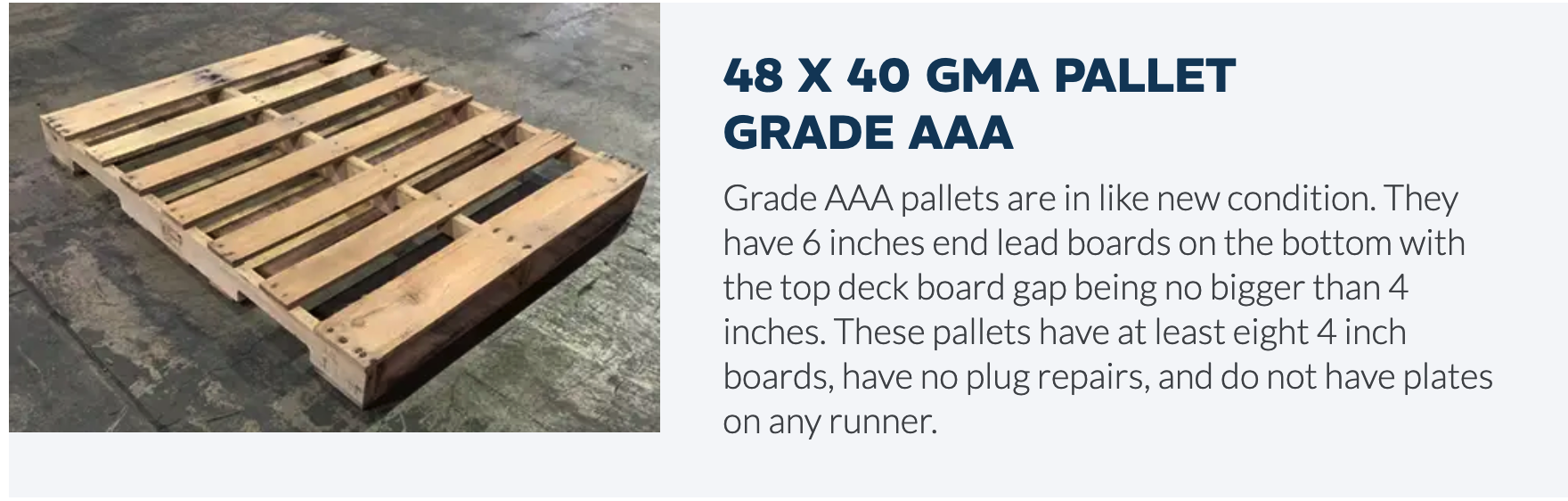
Grade AAA pallets are in like new condition. They have consistent board spacing, no plug repairs, and are well suited for higher value shipments or customer facing deliveries.
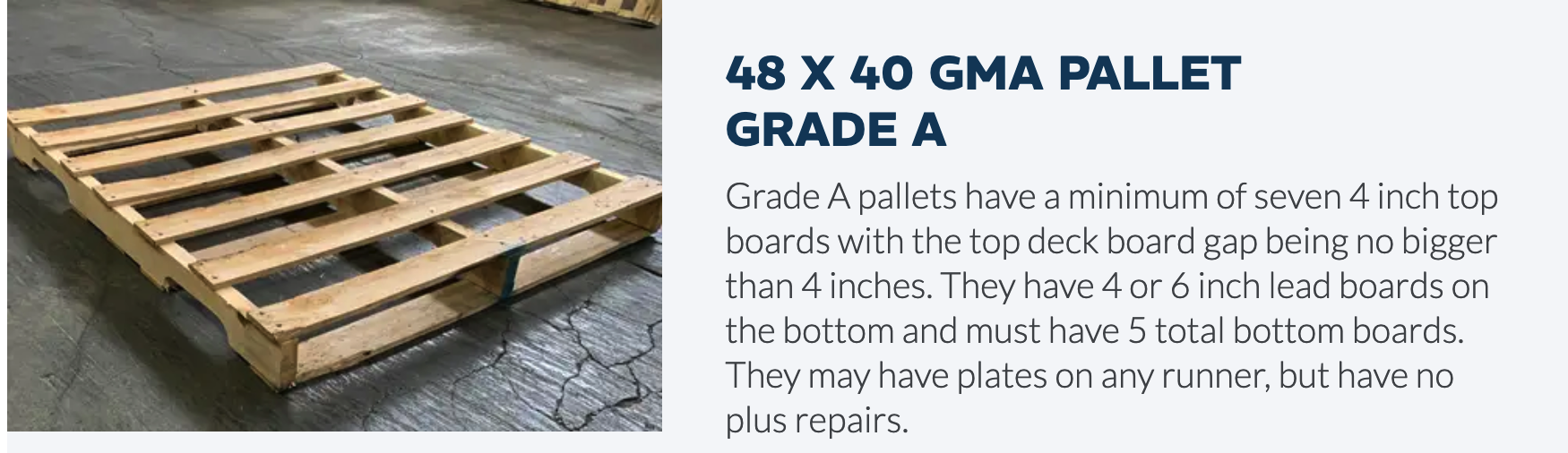
Grade A pallets provide strong performance with minor repairs allowed. They are a practical choice for many day to day shipping operations.
Grade B pallets are more cost effective and commonly used for heavier or less sensitive freight. While they may include repairs and show more wear, they still provide reliable support for many applications.
Choosing the right pallet grade helps balance cost, performance, and shipment protection.

Custom Pallet Builds for Specialized Freight
Some shipments require more than standard pallet sizes. Products with unique dimensions, weight distribution, or handling requirements may need custom pallet solutions.
Custom pallet builds can be designed to support specific weight loads, improve stability, and optimize space during transport. This is especially useful for industrial products, bulk materials, or irregularly shaped freight.
Using the right pallet design helps reduce shifting, improves handling safety, and supports better overall shipping performance.
Pallet Programs and Recycling Solutions
Managing pallet inventory is an ongoing challenge for many warehouses. Broken pallets, excess materials, and inconsistent supply can create operational inefficiencies.
Structured pallet programs help maintain consistent supply while removing unusable materials from the facility. Scrap pallet removal programs can clear damaged pallets and keep dock areas organized.
In addition, cardboard and plastic recycling programs help reduce waste and improve warehouse cleanliness. These programs allow businesses to maintain a more efficient and organized shipping environment.
Export Requirements and Heat Treated Pallets
For businesses shipping internationally, pallet compliance is critical. Many countries require wooden pallets to meet ISPM 15 standards, which involve heat treatment to prevent the spread of pests.
Using heat treated pallets helps avoid customs delays, rejected shipments, and additional costs. Ensuring compliance upfront is an important step for businesses involved in export shipping.
How Pallet Strategy Impacts Freight Performance
Pallet selection may seem like a small detail, but it has a measurable impact on freight operations. Consistent pallet sizes improve trailer utilization. Strong pallets reduce the risk of damage. Organized pallet programs support smoother warehouse workflows.
When combined with proper packaging and accurate shipment information, the right pallet strategy can help reduce disruptions and improve overall shipping reliability.
How Amware Supports Pallet and Shipping Operations
Amware helps customers coordinate pallet supply, custom builds, recycling programs, and export compliant pallet solutions as part of a broader logistics strategy.
By connecting pallet management with transportation and distribution services, businesses can improve efficiency across the entire shipping process.
For companies shipping LTL freight regularly, small improvements in pallet selection and management can lead to more predictable shipments, fewer issues, and better long term cost control. Contact us today for your pallet needs.